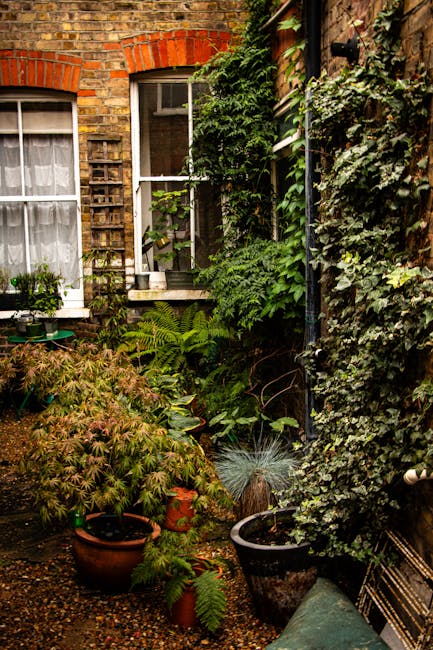
Best gardeners near Colindale station for small yards
If you live near Colindale station and your garden is more "compact urban patch" than sprawling lawn, you already know the challenge: every square metre matters. The best gardeners near Colindale station for small yards are the ones who understand tight access, awkward corners, neighbour-friendly work, and the kind of planting that actually looks good in a smaller space without swallowing it whole. That sounds simple. It rarely is.
Small yards can be brilliant, though. With the right gardener, a narrow courtyard, a paved back garden, or a modest front plot can feel calmer, greener, and far easier to maintain. This guide walks through what to look for, how the service works, what good results look like, and how to avoid wasting money on overcomplicated ideas that do not suit a smaller London garden.
You will also find a practical checklist, a comparison table, and a few plain-English tips that make the decision a lot easier. No fluff, no fantasy landscaping. Just useful advice for real homes near Colindale.
Table of Contents
- Why the right gardener matters for small yards
- How local gardening services work
- Key benefits and practical advantages
- Who this is for and when it makes sense
- Step-by-step guidance
- Expert tips for better results
- Common mistakes to avoid
- Tools, resources and recommendations
- Law, compliance, standards, or best practice
- Options, methods, or comparison table
- Case study or real-world example
- Practical checklist
- Conclusion
- Frequently asked questions
Why Best gardeners near Colindale station for small yards Matters
Small yards need a different kind of attention from large gardens. There is less room for error, less room for clutter, and often less room for machines, storage, or even just moving a wheelbarrow around without knocking into a fence. A good gardener near Colindale station should understand that. They should know how to work efficiently in tight spaces and how to make the space feel bigger rather than busier.
This matters even more in a busy London setting. Near Colindale station, you may be juggling commuting, work, family life, and the usual city frustration of trying to keep a garden looking tidy when you barely have time to enjoy it. That is where skilled local gardeners earn their keep. They do not just cut things back. They shape, simplify, and protect the overall balance of the space.
To be fair, lots of people start by asking for "a tidy-up," and that is fine. But a small yard often needs more than a tidy-up. It needs a plan. Otherwise you end up with overpruned shrubs, a few sad pots, and a space that somehow feels smaller than before. Not ideal.
Expert summary: In a small yard, the best gardening work is usually the work you hardly notice at first glance. Clean lines, smart plant choices, good proportion, and maintenance that keeps the garden breathing instead of fighting itself.
If you want to understand what a well-rounded local service typically includes, it can help to review the broader services overview and the company's about us page before booking anything.
How Best gardeners near Colindale station for small yards Works
In practice, a good small-yard gardening service starts with a look at the space as a whole. Not just the lawn, if there is one. Not just the beds. The whole space. Light, shade, drainage, access, storage, surfaces, and the way you actually use the yard all matter.
Here is the usual shape of it:
- Initial assessment: The gardener looks at the size, layout, condition, and practical limits of the yard.
- Priority setting: You agree what matters most: tidying, pruning, planting, border redesign, weed control, or ongoing care.
- Method choice: The gardener chooses appropriate hand tools, light machinery, or a mix of both. In small spaces, hand tools often win.
- Work plan: Tasks are ordered so the yard is not trampled or made messier than necessary. Sounds obvious, but you would be surprised.
- Waste removal and finishing: Debris is cleared, edges are sharpened, and the garden is left neat rather than half-done.
For compact gardens near Colindale station, access is often a real consideration. Some yards are reached through side gates, shared paths, basement steps, or narrow rear access. A gardener used to this kind of work will already be thinking about how to move materials safely and keep disruption down. That kind of experience is worth more than a shiny van and a cheerful brochure, honestly.
If you are comparing local providers, it is sensible to ask how they handle quoting and scheduling. You can also look at their pricing and quotes page to understand how they structure estimates, especially for one-off work versus regular maintenance.
Key Benefits and Practical Advantages
The best gardeners near Colindale station for small yards are not only improving appearances. They are solving practical problems. That is the real value.
- Better use of limited space: A small yard can feel more open when plants are scaled correctly and clutter is removed.
- Less ongoing work for you: Good planning means the space stays easier to maintain between visits.
- Healthier planting: The right plant in the right place is one of the simplest ways to avoid constant replacement.
- Cleaner boundaries: In tight gardens, edges, fences, and paving make a big difference to the overall feel.
- More privacy: Carefully chosen screening plants or layout tweaks can make a compact space feel calmer and more enclosed.
- Better year-round interest: You do not need a huge garden to have colour, texture, and structure through the seasons.
There is also a less obvious benefit: confidence. Many people put off dealing with a small garden because they assume there is not much that can be done. That is usually wrong. The right work can change the feel of a yard quickly, and sometimes the improvement is dramatic. A bit of pruning, a clever border reset, and the whole place suddenly seems to exhale.
If sustainability matters to you, it is worth choosing a gardener who takes waste seriously and understands practical reuse. The recycling and sustainability information can help you see how garden waste and material choices may be handled in a more responsible way.
Who This Is For and When It Makes Sense
This kind of service suits a few common situations.
- Busy commuters: If you use Colindale station daily and your weekends are already full, regular garden maintenance can save a lot of stress.
- New homeowners: If you have just moved into a property with a small yard, a gardener can help you understand what is salvageable and what needs rethinking.
- Landlords and rental properties: Small outdoor areas still affect presentation and upkeep expectations, especially when tenants change.
- Older residents: Jobs like pruning, lifting, or clearing can become awkward in a tight space, and it is sensible to hand them over.
- People who want a better-looking garden without a big redesign: Sometimes the answer is maintenance, not a full overhaul.
It also makes sense if the garden has become a bit overwhelming. That happens fast in small spaces. A few pots, one trug of weeds, a hedge left for "next month," and suddenly it all looks like a small jungle. Not a glamorous one either.
If you value a service that is transparent and easy to speak to, the contact us page is a sensible place to start. And if you want to know more about the people doing the work, the about us page can give useful context before you make a decision.
Step-by-Step Guidance
If you want the best outcome for a small yard, do not just ask for "garden maintenance." Be a bit more specific. Here is a straightforward way to approach it.
- Walk the space slowly: Notice what is cramped, what gets too much shade, and what keeps failing.
- Decide the main outcome: Do you want tidiness, a lower-maintenance layout, better planting, or all three?
- List the pain points: For example: uneven paving, overgrown shrubs, muddy patches, weeds in borders, or a lack of privacy.
- Ask for a realistic plan: In a small yard, less is often more. You want a plan that suits the space, not a dramatic makeover that ages badly.
- Check access and waste removal: Make sure the gardener knows where equipment and cuttings will go.
- Clarify maintenance needs: Ask what will need trimming, feeding, watering, or seasonal attention after the work is done.
- Agree the follow-up: A one-off clean-up is useful, but a compact yard usually benefits from regular light maintenance.
One small tip: take photos before the visit. Morning light is often best because the details show clearly. It makes discussion easier, especially if the gardener is helping remotely with an estimate or planning conversation. Simple, but it saves back-and-forth.
A simple way to brief a gardener
You might say: "This is a small yard near Colindale station. I want it tidy, easier to maintain, and less cluttered, but I still want some greenery and privacy." That kind of instruction is much better than "make it nice." Because, well, nice means different things to different people.
Expert Tips for Better Results
The best results usually come from a few practical choices made early.
- Choose structure first: In a small yard, hard edges, neat borders, and a few anchor plants often make the biggest difference.
- Limit the plant palette: Too many varieties can make the space look chaotic. A simpler mix is usually calmer and easier to maintain.
- Think vertical: Trellises, climbers, and wall-mounted planting can create interest without using ground space.
- Keep paths and access clear: A yard feels larger when you can move through it without sidestepping tools, pots, or overgrown edges.
- Schedule seasonal resets: Small gardens can look great for a while, then slip quickly. Short, regular visits often work better than waiting for a full rescue.
- Use containers carefully: Pots add flexibility, but too many can crowd a small yard. Group them with purpose.
In our experience, a good gardener will also tell you when not to spend money. That is a very good sign. If someone pushes expensive features into a tiny space without explaining the trade-offs, ask more questions. A sensible professional should be able to say, "Actually, that idea may make the yard feel tighter." That kind of honesty matters.
And if you are comparing providers, do not skip the practical details around how they work. The pages on health and safety and insurance and safety can be helpful indicators of professionalism, especially if tools, ladders, or heavier pruning are involved.
Common Mistakes to Avoid
Small yards make some mistakes more visible. A poor decision does not hide for long.
- Overplanting: Too many plants quickly create crowding and extra maintenance.
- Choosing the wrong scale: Large shrubs or oversized ornaments can dominate a tiny yard.
- Ignoring drainage: A small space with poor drainage can become muddy, slippery, or difficult to use.
- Forgetting year-round maintenance: A neat garden in spring can become tangled by late summer if nobody is watching it.
- Assuming cheap is best: The lowest quote is not always the best value if the result needs rework two months later.
- Not planning waste removal: Green waste, old soil, and dead material take up more space than people expect.
Another one: trying to make a small yard do everything. Dining area, play area, storage area, wildlife area, full lawn, raised beds, privacy screen, and a mini jungle? It can be done badly, yes. A better solution is usually to decide what the yard really needs and let the rest go. That is not defeat. That is smart design.
Tools, Resources and Recommendations
You do not need a shed full of specialist kit to keep a small garden in shape, but the right tools help.
Useful tools for small-yard gardening
- Bypass secateurs: Good for clean pruning on living stems.
- Lightweight hedge trimmers: Useful where hedging is part of the boundary, though hand finishing is often needed.
- Hand fork and trowel: Ideal for compact borders and container work.
- Garden rake: Handy for clearing leaves and tidying soil or gravel.
- Wheelbarrow or garden trug: Small, manageable waste movement matters in tight access spaces.
- Watering can or hose with controlled reach: In small yards, precise watering avoids mess and waste.
What to ask before you book
- Do you have experience with small urban yards?
- How do you handle access and waste removal?
- Can you help with both maintenance and redesign suggestions?
- Do you provide clear pricing and written quotes?
- What happens if the weather affects the schedule?
That last one is worth asking. London weather can be annoyingly changeable; one minute it is fine, the next it is damp and blustery. A good gardener will plan around that without making the process feel chaotic.
Useful company pages to review
If you are considering a service provider, it is sensible to read a few trust pages alongside the main service information. The services overview, pricing and quotes, and payment and security pages can help set expectations before you commit.
Law, Compliance, Standards, or Best Practice
For garden work in a small residential setting, the most useful compliance questions are usually practical rather than dramatic. You are not looking for legal theatre; you are looking for safe, orderly work that respects property, people, and waste handling.
Good practice generally includes:
- safe use of tools and machinery
- careful handling of cuttings and waste
- clear communication about access and working areas
- appropriate insurance for the work being done
- reasonable respect for neighbouring properties and shared spaces
If the gardener is pruning, lifting, or working near walls, fences, uneven ground, or tight access routes, safety should not be treated as a box-tick. It should be part of how the job is planned. The relevant company documents on health and safety policy and insurance and safety are the kinds of pages a careful customer may want to review.
Waste and recycling also matter. In a small yard, green waste can build up quickly and become awkward to store. Responsible disposal is one of those unglamorous details that separates a smooth job from a messy one. The good news is that it is easy to ask about, and worth asking about.
Finally, if you have any concerns about how a provider handles terms, privacy, or service expectations, do not be shy about checking the relevant pages. The terms and conditions, privacy policy, and complaints procedure pages exist for a reason. Use them. Nobody enjoys needing them, but it is better to know where you stand.
Options, Methods, or Comparison Table
When choosing help for a small yard, the main decision is often between a light maintenance visit, a one-off tidy-up, or a more involved redesign and planting refresh. Each has its place.
| Option | Best for | What it usually includes | Watch out for |
|---|---|---|---|
| Regular maintenance | Yards that already have a decent layout | Weeding, pruning, edging, tidying, seasonal care | May not solve a poor layout on its own |
| One-off tidy-up | Overgrown or neglected spaces | Clearance, cutting back, debris removal, basic shaping | Can look great short-term if follow-up is ignored |
| Small redesign | Spaces that feel cramped or awkward | Planting changes, structure improvements, layout adjustments | Needs realistic expectations and a sensible brief |
| Container-led refresh | Very compact yards or paved spaces | Pots, seasonal planting, grouped displays, easy swaps | Too many containers can make the area feel crowded |
The right method depends on what is already there. If the garden is basically sound, maintenance may be enough. If the yard feels tired, cluttered, or oddly proportioned, a small redesign can pay off quickly. And if you are unsure, ask for a visit and a straightforward view. Good gardeners usually see the problem faster than the owner does, partly because they are not emotionally attached to the old rusty planter that has been "temporarily" in the corner for three years.
Case Study or Real-World Example
Imagine a small rear yard close to Colindale station: narrow paving, a couple of tired beds, an overgrown shrub by the fence, and a few containers that have become a bit of a dumping ground for half-living plants. The owner wants it to feel more welcoming but does not want a full redesign.
A practical approach might go like this. The gardener clears dead growth first, cuts back the shrub to open up light, removes clutter, and reshapes the beds so they read as deliberate rather than random. Then they choose a smaller set of plants with different textures: one structured evergreen, one flowering feature, and a few lower plants to soften the hard edges. A mulch or neat top-dressing helps finish the look and reduces weed growth.
The result is not dramatic in a flashy way. It is calmer. Easier to walk through. Less cluttered. The yard starts to look like someone actually uses it, which is often the whole point. You can hear this kind of change in the space too: less rustle from overgrowth, less scrape from pots shoved aside, more room to move. It feels less cramped on a wet evening, especially when the light is low and the paving starts to glisten a bit.
That sort of outcome is what people usually mean when they say they want the "best gardeners near Colindale station for small yards." They want judgement, not just labour.
Practical Checklist
Use this before you book or before a gardener visits.
- Have you measured the space roughly, or at least taken clear photos?
- Do you know whether you want maintenance, clearance, or improvement work?
- Have you listed the biggest problems: weeds, shade, drainage, privacy, clutter?
- Is access clear for tools, waste, and any equipment needed?
- Have you checked whether the gardener has experience with small urban gardens?
- Have you asked how pricing is structured?
- Do you know what happens to the waste after the job?
- Have you reviewed relevant trust pages such as about us and services overview?
- Have you thought about how the garden should look in six months, not just on day one?
- Are you happy that the plan fits your budget and the scale of your yard?
Quick take: If a gardener can explain how they will improve a small yard without making it feel busier, you are probably speaking to someone who gets the brief.
Get a free quote today and see how much you can save.
Conclusion
Finding the best gardeners near Colindale station for small yards is less about chasing the fanciest offer and more about choosing someone who understands proportion, access, maintenance, and restraint. Small gardens reward practical thinking. They need neatness, smart plant choices, and a gardener who knows when to simplify rather than add more.
If you focus on clear communication, sensible pricing, safety, and a realistic plan for the space, you are far more likely to end up with a yard that feels better to live with day to day. That is the real win. Not perfection. Not a magazine spread. Just a garden that works beautifully for normal life, which is enough.
And truth be told, a small yard that feels calm on a busy evening near Colindale station can lift your whole day a bit. That is worth doing properly.
Frequently Asked Questions
What should I look for in a gardener near Colindale station for a small yard?
Look for experience with compact spaces, clear communication, sensible pricing, and a practical approach to layout and maintenance. Small yards need judgement as much as labour.
Is a one-off tidy-up enough for a small garden?
Sometimes, yes. But if the garden tends to fall back into clutter quickly, regular maintenance is usually better value over time.
How do I know if a gardener understands small urban gardens?
Ask how they would improve space, access, planting scale, and upkeep. If they immediately talk about the size of the lawn and ignore the rest, that is not a great sign.
Should I ask for a quote before the gardener visits?
If possible, yes. A rough estimate can be helpful, but small yards are often best priced after a quick look at access, condition, and the exact work involved.
What kind of work is most useful in a small yard?
Pruning, weeding, edging, clearing clutter, improving structure, and choosing better-scaled planting usually make the biggest difference.
Can a gardener help make a small yard look bigger?
Yes. Good spacing, simpler planting, cleaner lines, and reduced visual clutter can all make a compact garden feel more open.
How often should a small garden near Colindale be maintained?
That depends on the planting and how much you use the space, but many small gardens benefit from light, regular visits rather than waiting for a major overhaul.
What if my yard has poor access?
That is common in London and not usually a deal-breaker. A good gardener will plan around narrow gates, steps, or shared access with suitable tools and waste handling.
Do I need to worry about safety and insurance?
Yes, it is sensible to ask. If tools, ladders, heavy pruning, or waste removal are involved, safety and insurance should be clear from the start.
How can I keep costs under control?
Be specific about priorities, avoid unnecessary features, and choose a plan that suits the size of the yard. A gardener who helps you simplify can save money as well as effort.
Is sustainability relevant for a tiny garden?
Absolutely. Even a small yard produces waste, and plant choices affect watering, maintenance, and long-term replacement needs. A thoughtful approach can reduce both cost and effort.
What is the best next step if I am ready to book?
Review the service information, check the trust and policy pages, and then make an enquiry through the contact us page. A short conversation usually clears up a lot quickly.