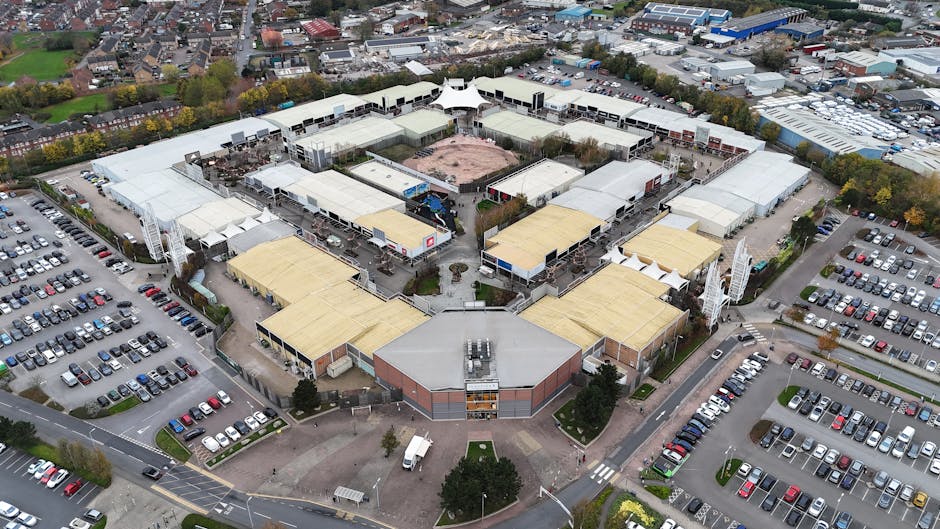
Garden services for Brent Cross and Colindale retail areas
Retail landscapes do a lot more work than people sometimes realise. They have to look inviting at 8am, still look decent after lunch, and keep holding up when footfall, deliveries, bins, weather, and the odd spilled coffee all take their toll. That is where Garden services for Brent Cross and Colindale retail areas come in: practical, reliable outdoor care for shopping parades, retail parks, forecourts, shared entrances, and the little green spaces that shape first impressions.
If you manage a retail unit, run a small cluster of shops, or look after communal grounds near Brent Cross or Colindale, this guide walks through what professional garden care involves, why it matters, and how to choose the right approach without overcomplicating it. Truth be told, most sites do not need exotic ideas. They need tidy edges, safe access, healthy planting, and a maintenance plan that actually fits the place.
For a broader view of the available work, you may also find the services overview useful, especially if you are comparing routine upkeep with one-off clearance, landscaping, or heavier remedial jobs.
Table of Contents
- Why garden services matter in retail areas
- How the service works in practice
- Key benefits and practical advantages
- Who this is for and when it makes sense
- Step-by-step guidance
- Expert tips for better results
- Common mistakes to avoid
- Tools, resources and recommendations
- Law, compliance, standards, or best practice
- Options, methods, or comparison table
- Case study or real-world example
- Practical checklist
- Conclusion
- Frequently asked questions
Why Garden services for Brent Cross and Colindale retail areas Matters
Retail spaces are judged quickly. A customer rarely thinks, "Lovely, the hedge has been trimmed with real finesse." They just notice whether the frontage feels cared for. Clean planting beds, clipped edges, litter-free borders, and healthy lawn areas quietly shape trust before a customer even opens the door.
In busy parts of Brent Cross and Colindale, that matters even more because retail sites are exposed to mixed use. You get constant movement, service traffic, changing weather, and a lot of small wear-and-tear that adds up. One untidy corner can make a whole entrance feel neglected. On the other hand, a well-kept outdoor area makes a unit feel open, safe, and professionally run.
There is also the practical side. Overgrown shrubs can narrow walkways. Poorly maintained hedges can hide signage or sightlines. A patchy lawn or weed-heavy border can turn into an ongoing nuisance. So garden services are not just "making things look nice"; they help keep the site usable. That sounds obvious, but in real life it saves hassle.
Expert summary: Retail garden maintenance is about more than appearance. It supports access, safety, customer confidence, and day-to-day site presentation, especially where footfall is high and the environment is constantly changing.
If a site also needs a deeper reset, a one-off garden clearance can remove overgrowth, debris, and clutter before a regular maintenance schedule starts. That is often the cleanest way to avoid trying to maintain a problem that has already run away a bit.
How Garden services for Brent Cross and Colindale retail areas Works
Most retail garden care starts with a site assessment. The gardener or landscape team looks at the size of the area, what is planted, how often the site is used, and what problems keep coming back. Is it weeds in beds? Poor drainage? Straggly hedging? Tired turf? Broken edging? They will normally want to know what the site needs week to week, and what can be tackled less often.
From there, the work is usually split into routine maintenance and project work. Routine care may include lawn mowing, hedge trimming, leaf clearance, pruning, weeding, edging, and tidying entrances. Project work may include replanting, hard landscaping, new beds, decking, or a complete redesign of part of the frontage.
For example, a retail parade might need weekly or fortnightly attention in spring and summer, then a lighter schedule in colder months. A retail park with large planted borders could need occasional pruning and seasonal bedding changes rather than frequent mowing. Different site, different rhythm. Simple as that.
Where presentation is the priority, services such as garden maintenance and lawn mowing often do most of the day-to-day heavy lifting. If the site has tall or awkward growth that is affecting visibility or access, hedge trimming can make a big difference very quickly.
In many cases, the best results come from combining care rather than treating every outdoor job as separate. A good team will think about the whole site: how the entrance looks, how customers move through it, where litter collects, and where maintenance is easiest to miss. That wider view matters more than people expect.
Key Benefits and Practical Advantages
There are plenty of reasons retail managers keep garden services on the schedule, but the main benefits are fairly grounded.
- Better first impressions: tidy outdoor areas help customers feel confident before they step inside.
- Safer access: clear paths, trimmed growth, and well-kept boundaries reduce avoidable trip and visibility issues.
- Less reactive work: regular visits catch problems before they become expensive or time-consuming.
- More consistent site standards: outdoor spaces stop swinging between "fine" and "slightly neglected."
- Better use of staff time: site teams can focus on the retail operation instead of trying to manage gardening in-house.
- Stronger seasonal control: planting, leaf fall, and growth surges are easier to handle when planned.
There is also a subtle commercial benefit. People tend to trust retail spaces that look organised. Not because they are glamorous, but because they feel looked after. That is a small distinction, but an important one. A well-managed frontage signals that the rest of the site is likely to be well managed too.
For outdoor upgrades, some sites combine maintenance with landscaping or landscape gardening to refresh beds, improve structure, or make awkward corners more useful. If the site includes timber features or customer seating zones, decking services may also be worth considering as part of a broader improvement plan.
Who This Is For and When It Makes Sense
This kind of service is relevant to more people than you might think. It is not just for big shopping centres with long boundaries and flowerbeds that need constant attention. Smaller retail units can benefit just as much, especially if they have front planting, shared access routes, or outdoor areas that customers see immediately.
Garden services make sense for:
- retail park managers
- shopping parade landlords
- commercial property managers
- shop owners with shared frontage planting
- office and retail mixed-use sites
- caretakers responsible for communal outdoor areas
- facilities teams handling grounds presentation
It also makes sense when the site has one or more of these signs:
- weeds returning too quickly
- hedges blocking sightlines or signage
- grass looking uneven or tired
- leaf build-up near entrances
- spindly shrubs that no longer suit the site
- areas that look fine from a distance but messy up close
Let's face it, retail sites are full of little details that customers register without realising. A slightly scruffy planter by the door can matter more than the whole car park. Strange, but true.
Step-by-Step Guidance
If you are thinking about bringing in retail garden services, here is a practical way to approach it.
- Walk the site properly. Not just a quick glance from the entrance. Check the back corners, service edges, boundary lines, and places where litter or leaf debris tends to gather.
- Separate routine tasks from bigger issues. Routine tasks are your mowing, trimming, weeding, and general tidying. Bigger issues might involve clearance, replanting, drainage problems, or redesign.
- Decide what "good" looks like. Some sites need pristine presentation. Others just need tidy, safe, and low-fuss. Be clear, because there is no point paying for a level of service you do not actually need.
- Set a realistic schedule. Weekly, fortnightly, monthly, seasonal - it depends on the site. Fast-growing hedges and customer-facing lawns usually need more frequent attention.
- Build in seasonal work. Spring growth, summer dryness, autumn leaves, and winter debris all change the workload. A decent maintenance plan should flex a bit.
- Review the results on-site. If the same problem keeps returning, it may need a different method. Maybe a different pruning approach, maybe a planting change, maybe a clear-out first.
One useful habit: take photos before the first visit and after the first few sessions. Nothing fancy. Just enough to compare. It makes it much easier to judge whether the routine is working or whether the site needs more structural improvement.
Expert Tips for Better Results
A few small choices often make the biggest difference in commercial garden care. The first is consistency. Retail gardens usually look best when someone is maintaining them before problems become obvious. Waiting until hedges have visibly burst outwards or beds are full of weeds is, frankly, a bit of a trap.
Second, match the planting to the site. Some retail frontage schemes look lovely in April and then fall apart by July because the planting does not cope with heat, shade, foot traffic, or neglect. Hardier planting often performs better than fragile planting that needs constant rescue.
Third, think about sightlines. Customers and drivers need to see entrances, signs, crossings, and parking movements clearly. Growth that looks harmless in a bed can become an awkward obstruction surprisingly fast.
Fourth, keep a little space around things that matter: signs, gates, bin stores, steps, service doors, and lighting points. The neatest sites are usually the ones where nothing is allowed to crowd the useful bits.
And a tiny but real tip: ask for the "boring bits" to be included. Edges, corners, fence lines, under benches, around bases, behind planters. That is where a site starts to look genuinely cared for. Anyone can mow the obvious patch. Not everyone does the edges properly.
Common Mistakes to Avoid
Retail outdoor care goes wrong in fairly predictable ways. The good news is that most of them are avoidable.
- Only planning for appearance: if access, drainage, and safety are ignored, the site can still function badly even if it looks tidy for a day.
- Using a reactive schedule: waiting until the place looks bad usually costs more and creates more disruption.
- Ignoring seasonal growth: spring and early summer can change the whole workload in a few weeks.
- Leaving clearance too late: once an area becomes overgrown, the job is slower and more awkward.
- Over-trimming or under-trimming: both can damage plants and create a patchy look.
- Not checking for recurring site hazards: broken edging, poor drainage, blocked corners, and poor access routes tend to keep coming back if nobody flags them.
Another common mistake is assuming every retail site needs the same plan. It does not. A compact Colindale parade with small front beds and regular foot traffic will need a different rhythm from a larger Brent Cross retail environment with wider grounds and shared service access. Obvious maybe, but it is easy to miss when people are busy.
Tools, Resources and Recommendations
Good garden services rely on more than a mower and a hedge cutter. The best results usually come from the right mix of tools, timing, and site understanding.
| Need | Useful approach | Why it helps |
|---|---|---|
| Regular presentation | Routine garden maintenance | Keeps the site tidy without letting small issues build up |
| Open sightlines | Hedge trimming and selective pruning | Improves visibility around entrances, signage, and paths |
| Clean, level frontage | Lawn mowing and edging | Creates a neat, even finish customers notice straight away |
| Heavily neglected spaces | Garden clearance | Removes overgrowth, waste, and dead material before regular upkeep starts |
| Site refresh | Landscaping | Improves layout, function, and the overall feel of the space |
In practical terms, the tools are less important than whether they are used with judgment. A hedge can be reduced too aggressively, turf can be cut too short, and borders can be stripped back in a way that leaves the site looking bare rather than cared for. Experience shows in the finishing, not in the noise of the machinery. And yes, some of the quieter work is the most valuable.
If the site has a recycling or waste-handling angle, it is worth reading the company's recycling and sustainability approach too. That can be useful when you are considering green waste removal, material separation, or a more responsible maintenance routine overall.
Law, Compliance, Standards, or Best Practice
Garden services for retail areas are not usually about heavy regulation, but compliance and care still matter. Retail sites have duties around safe access, decent maintenance, and sensible management of areas used by staff, contractors, and visitors. In plain English: if a planted area is creating a risk, it should not be ignored.
Best practice generally includes:
- keeping paths and entrances clear
- reducing trip hazards from overgrowth, loose debris, and uneven borders
- using safe working methods for ladders, cutting tools, and waste handling
- coordinating site work to avoid peak customer disruption
- carrying suitable insurance for the type of work being done
It is also sensible to ask how a contractor handles health and safety, because not all outdoor jobs are equal. Tree work, for example, needs more care than basic mowing. If a site has larger trees, awkward branches, or anything that could affect buildings or footpaths, tree lopping and removal should be treated as a specialist task rather than a casual add-on.
For reassurance on how a contractor approaches risk and public safety, review their health and safety policy and insurance and safety information. If you are comparing service terms or booking expectations, their terms and conditions and payment and security pages can also help set expectations early.
Options, Methods, or Comparison Table
Retail sites usually fall into one of three broad maintenance styles. Each has a place. The trick is choosing the one that matches the site instead of trying to force a perfect solution that does not fit.
| Approach | Best for | Pros | Watch out for |
|---|---|---|---|
| Routine maintenance only | Tidy sites with manageable planting | Predictable, steady, cost-controlled | Can miss deeper issues if the site is already tired |
| Maintenance plus periodic clearance | Sites with occasional overgrowth or seasonal build-up | Balances upkeep with reset work | Needs a clear schedule or the clearance jobs pile up |
| Maintenance plus landscaping upgrades | Sites needing a visual or functional refresh | Improves presentation and usability | Costs more upfront and needs planning |
If the outdoor area is mostly fine but simply needs reliable upkeep, routine maintenance may be enough. If the site has become cluttered or overgrown, start with clearance and then move to maintenance. If the space no longer suits how the retail site operates, a landscaping review can save you from patching up the wrong layout for another year. That part gets overlooked surprisingly often.
Case Study or Real-World Example
Imagine a small retail strip near Colindale with a shared frontage, a few planters, a tired patch of grass, and hedges that have slowly drifted outward over a couple of seasons. Nothing dramatic. But customers start noticing that the entrance feels squeezed, litter catches in the borders, and the signage is partly hidden in summer growth.
The first step is not to redesign everything. It is to reset the space. A clearance visit removes dead material, a tidy pruning pass restores shape, and the lawn is brought back to a manageable condition. After that, the team shifts into regular maintenance with seasonal attention to weeds, edging, and hedge growth. The space still looks natural, but it stops looking forgotten.
Then, once the routine is stable, the owner adds a small landscaping refresh: cleaner borders, tougher planting, and a better edge to the entrance. No drama, no grand reinvention. Just a site that feels easier to walk past and nicer to visit. Small improvements, repeated, make a real difference over time. You can almost hear the place breathe easier.
Practical Checklist
Before you book garden services for a retail area, run through this checklist.
- Have you walked the whole site, not just the front entrance?
- Do you know which areas are customer-facing and which are service-only?
- Are there any access, trip, or visibility issues caused by growth or debris?
- Does the site need routine upkeep, a one-off clearance, or a bigger refresh?
- Are mowing, trimming, pruning, and weeding all part of the plan?
- Is the work schedule realistic for the way the site operates?
- Have you asked about health and safety, insurance, and site procedures?
- Is there a clear understanding of waste handling and green waste removal?
- Do you need any landscaping or decking improvements alongside maintenance?
- Is the contractor easy to contact if the site conditions change?
If you are still deciding what level of service you need, start with the basics and build from there. That is usually the least stressful route, and it tends to produce better results than trying to do everything at once.
Conclusion
Good garden care in retail settings is quietly powerful. It keeps Brent Cross and Colindale retail areas looking cared for, helps people move safely through the site, and reduces the slow creep of neglect that can make even a strong business look less polished than it should. The best service is rarely the flashiest one. It is the one that shows up, notices the details, and keeps the place in shape week after week.
Whether you need regular upkeep, a clear-out, or a broader landscaping plan, the right approach is the one that fits your site rather than forcing the site to fit the maintenance. That is where the value is. Calm, practical, consistent.
Get a free quote today and see how much you can save.
If you want to understand the team behind the work before making a decision, take a look at the about us page. And if you are ready to talk through your site, the contact us page is the sensible next step.
Done well, garden services do not just tidy a space. They help a retail area feel looked after, and that feeling lasts.
Frequently Asked Questions
What do garden services for retail areas usually include?
They usually include mowing, hedge trimming, weeding, pruning, leaf clearance, edging, and general tidy-up work. Some sites also need clearance, landscaping, or tree-related work if the outdoor space has become overgrown or awkward.
How often should a retail garden be maintained?
It depends on the site. Busy customer-facing areas often need weekly or fortnightly attention in the growing season, while larger planted areas may need less frequent visits. The best schedule is the one that stops problems building up.
Is one-off garden clearance enough for a retail site?
Sometimes, yes, if the space is simply overgrown or has been left too long. But most retail sites benefit from a follow-up maintenance plan so the problem does not come back within a few months.
Why is garden maintenance important for shops and retail parks?
Because it affects first impressions, access, and safety. Customers notice when an entrance is tidy and easy to move through. They also notice when growth, weeds, or debris make a site feel neglected.
Can garden services be done without disrupting customers?
Usually, yes. Good planning matters here. Work can often be scheduled around quieter periods, with tidy containment of clippings and sensible access management. Retail sites do not need to turn into a building site, thankfully.
What if the site has poor sightlines or overgrown hedges?
That is a strong sign that hedge trimming or selective pruning is needed. If the issue is severe, the contractor may recommend a clearance or a more structural reshaping of the planting.
Do retail garden services include landscaping?
They can. Landscaping is useful when the current layout is no longer working, the planting is tired, or the frontage needs a more durable and attractive design. It is more of a refresh or redesign than simple upkeep.
How do I know if I need lawn mowing or a more complete maintenance plan?
If the site only has grass that needs cutting, mowing may be enough. If the area also has weeds, hedges, borders, debris, or general wear, a broader maintenance plan will usually be more effective.
Are tree works part of normal garden maintenance?
Not always. Smaller pruning may be included, but larger or more complex work should be treated separately. If branches are affecting access, buildings, or visibility, a specialist tree service is usually the safer route.
What should I ask before hiring a garden contractor?
Ask what is included, how often visits will happen, what happens in bad weather, how waste is handled, and whether they have insurance and clear health and safety procedures. Those basics tell you a lot.
How do I compare quotes fairly?
Compare like with like. Look at the scope of work, visit frequency, waste removal, and whether the quote includes clearance or only routine maintenance. A cheaper quote is not always cheaper if it leaves out half the job.
What is the best way to keep a retail frontage tidy year-round?
A simple plan that combines routine maintenance with seasonal review works well. Keep an eye on growth surges, leaf fall, and problem areas near entrances or service routes. Small steady work beats occasional panic every time.